Marine Engineering Services
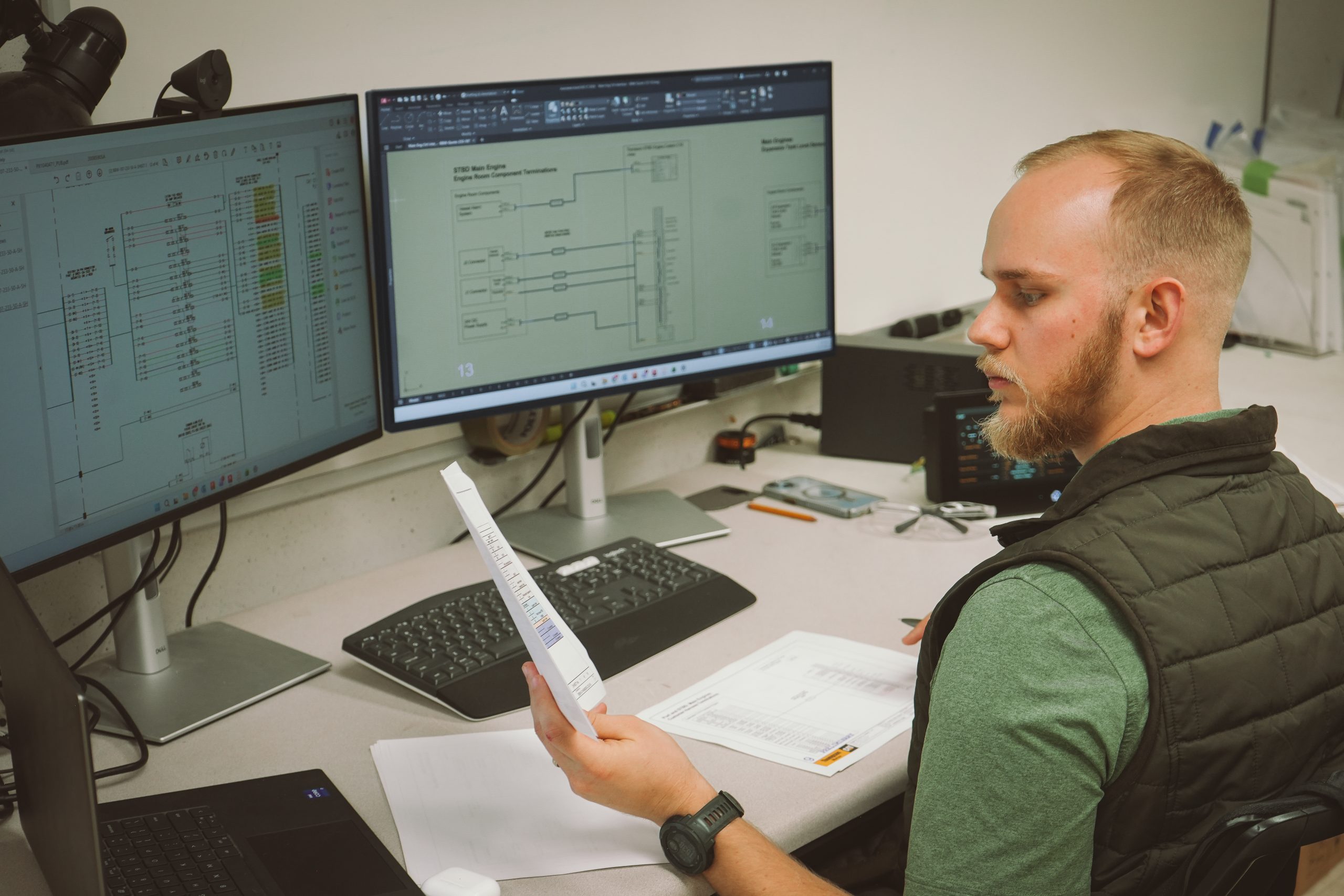
Engineering-Led Integration for Vessels
Thompson Marine’s in-house engineering team designs, integrates, and commissions complete CAT® power and Berg Propulsion systems for vessels. The team manages the entire project lifecycle, from initial analysis and system specification through installation, sea trial support, and commissioning.
Complete System Packaging and Integration
Thompson Marine engineers complete, installation-ready packages that go beyond engines and thrusters. Packages can include transmissions, ancillary items, and custom piping, documented with wiring schematics and mechanical installation drawings specific to the installation.
Mechanical and Electrical Integration
The primary focus of Thompson Marine’s engineering work is integrating complex power and propulsion systems into the vessel’s existing or new structure, ensuring all mechanical connections, electrical systems, and controls work in concert.
Control and Monitoring System Design
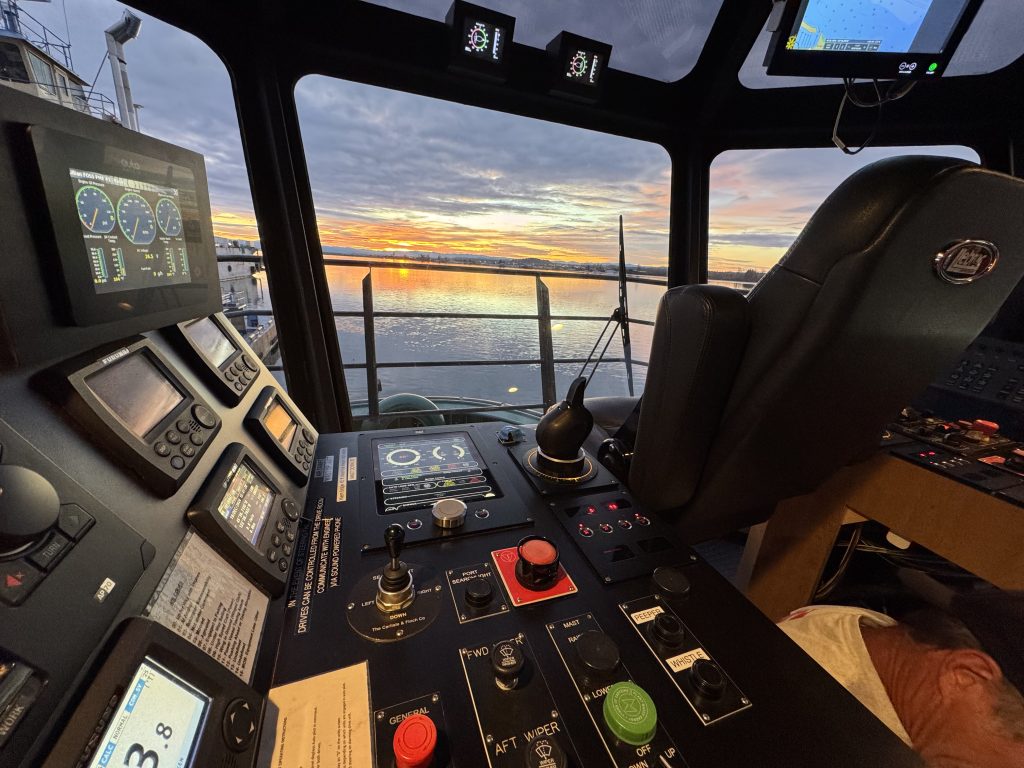
Thompson Marine designs and builds control and monitoring systems calibrated to the operational requirements of the vessel and the power systems installed, providing reliable command and clear visibility of all machinery.
Power Package Design and Build
Complete power packages are engineered, fabricated, and documented in-house, covering electrical integration, mechanical integration, and all supporting systems.
Power and Propulsion SystemS: Modern Power for Proven Hulls
Thompson Marine provides the engineering foundation for vessel builds, ensuring CAT marine engines and Berg Propulsion systems are specified, integrated, and installed for optimal performance from the first day of commercial service. Whether repower, retrofit, or new construction, Thompson Marine delivers the same engineering rigor and service quality. Engineering analysis includes:
Piping system calculations covering exhaust backpressure, fuel and air supply, and cooling water flow
Engine room air supply and exhaust sizing to maintain ideal operating conditions
Torsional Vibration analysis
Six-degrees-of-motion studies
Finite Element Analysis
Shaft whirling analysis
Electrical schematics and wiring diagrams
Upgrading an existing vessel requires more than a new engine or propeller. It requires re-engineering mechanical and electrical systems within the constraints of the hull, the engine room, and the vessel’s existing controls and auxiliary systems. Thompson Marine specializes in minimally invasive integration, reducing the need for costly structural modifications while delivering modern performance.
Fleet Modernization Planning
Thompson Marine works directly with fleet managers to develop repower and retrofit plans aligned with maintenance windows and operational schedules.
Legacy System Integration
Ensures new Caterpillar engines and Berg Propulsion systems work seamlessly with existing controls and auxiliary equipment where possible, delivering modern efficiency without a full vessel overhaul.
Commissioning Support
Every new Berg propulsion installation or major system upgrade benefits from factory-trained commissioning support to verify that the system has been installed correctly, that all control parameters are properly configured, and that the vessel performs to specification before returning to commercial service.
Thompson Marine provides complete Berg commissioning support, including:
Berg Propulsion Integration
Berg Propulsion systems offer native control architecture capable of managing mechanical, direct-drive electric, and battery-hybrid power sources within a single platform. Thompson Marine’s engineering team configures Berg’s control system to the specific requirements of the vessel and the power plant, without complex third-party add-ons or external automation layers.
Hybrid Propulsion Systems
Thompson Marine designs and integrates hybrid propulsion systems combining Caterpillar main engines with Berg developed Z-drives and propellors, electric motors, variable frequency drives, and a Thompson Marine-developed control interface. These systems reduce main engine hours, lower fuel consumption and prolong expensive engine overhauls, and establish the architecture for future battery integration without requiring a second round of major upgrades.